
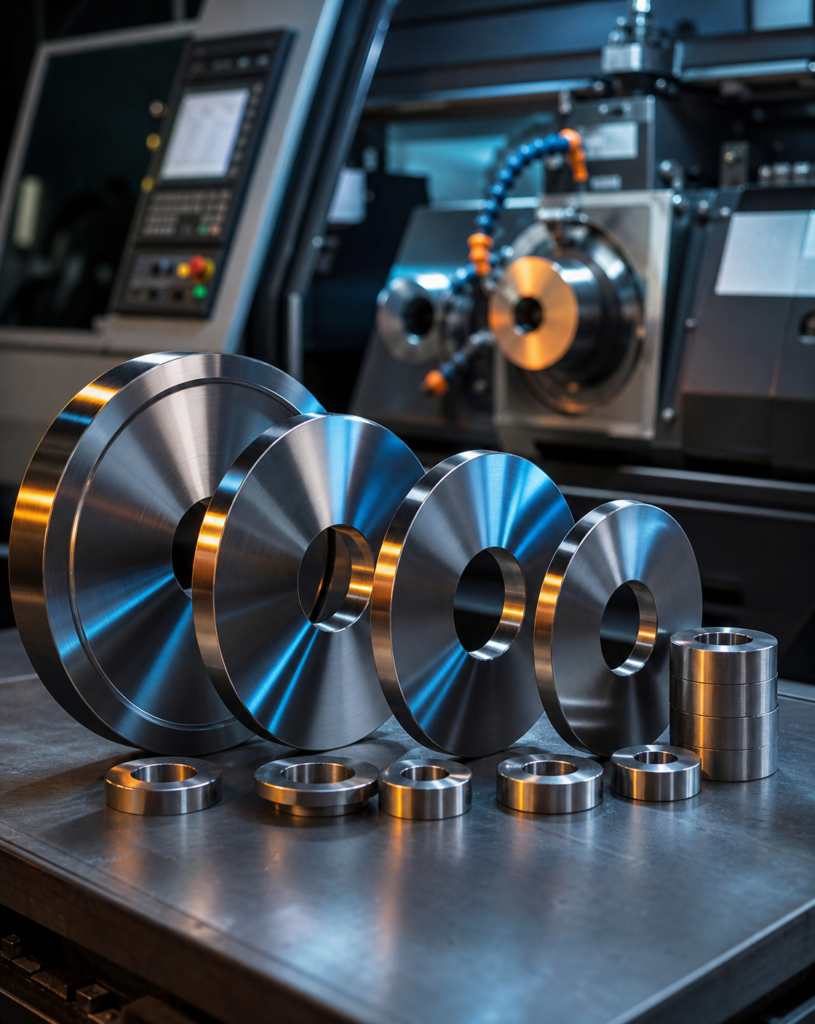
Why Slitting Precision Is the First Threshold of Industrial Cutting Efficiency
On high-speed slitting lines for film, paper, metal foil, and tape, the geometric precision of the blade is amplified at every slitting station. When edge runout, parallelism, or thickness tolerance falls short, the first symptom is not “fails to cut” — it is burrs, dust, curled edges, and frequent blade-change downtime. That is why more and more plants are turning to precision slitting blades: they set both the speed ceiling and the yield floor of an entire line.
What Does ±0.002mm Tolerance Actually Mean?
Baitian Blade controls the thickness and critical dimensions of its precision slitting blades to ±0.002mm. This figure is not marketing language — it is a benefit that can be quantified downstream:
- Lower edge runout and flat slit faces, eliminating the need for secondary trimming;
- Consistent tension distribution across stacked and multi-station slitting, sharply reducing web breaks;
- More predictable tool life, turning the blade-change cycle from “by feel” into “by data.”
The Cost of Losing Control of Tolerance
When tolerance loosens from ±0.002mm to ±0.01mm, the gap looks like only 0.008mm. But at a line speed of 800 m/min, accumulated error shows up directly as edge burrs and arbor vibration — and is finally settled in the form of downtime, scrap, and customer complaints.
How German Grinding Machines Guarantee Consistency
Precision is not “ground once” — it is ground consistently. Baitian Blade uses imported German CNC grinding machines for edge forming and fine grinding, supported by in-line inspection and a temperature-controlled grinding environment:
- Rough grinding — rapid stock removal to establish the reference surface;
- Fine grinding of the cutting edge — constant feed and micron-level compensation to control the edge angle;
- Inspection and re-inspection — thickness, parallelism, and runout recorded blade by blade to create traceable data.
Material and Heat Treatment: The Other Half of Precision
Even the finest grinding machine cannot turn unevenly heat-treated steel into a stable blade. Depending on the application, we select powder metallurgy high-speed steel, carbide, and high-performance tool steels, then complete quenching and multiple tempering cycles in vacuum heat-treatment furnaces to balance hardness and toughness. Edge hardness is typically held within HRC 60-65, combining wear resistance with resistance to edge chipping.
How to Choose Precision Slitting Blades for Your Line
- Material being cut: film, paper, metal foil, and nonwoven fabric each demand a different edge angle;
- Line speed and tension: high-speed lines require a smaller edge radius and a higher dynamic balance grade;
- Arbor structure: air shafts, mechanical shafts, and spacer-type designs have different mounting tolerances;
- Blade-change cadence: whether a setup-free design is needed to shorten downtime.
Conclusion
In industrial cutting, the competition for efficiency ultimately comes down to micron-level differences. The value of a precision slitting blade is not in its unit price, but in the one less stop and the one less scrapped roll it gives your line. If burrs, web breaks, or frequent blade changes are holding you back, Baitian Blade is ready to help you anchor your tolerance back to ±0.002mm.