
Industrial machine knives should be selected from the cutting application, not from a product name alone. The material being cut, machine arrangement, mounting details, blade geometry and required cut quality all affect the correct knife. A knife that works well on paperboard may be unsuitable for metal strip, plastic recycling or film converting.
This guide explains the main selection steps and the information to prepare before requesting a quotation. If a standard catalogue knife does not match your equipment, Baitian Blade operates as a source factory for machine knives and can review highly customized requirements from a drawing, CAD file, worn sample or machine information.
What Are Industrial Machine Knives?
Industrial machine knives are cutting components installed in production equipment. They may be straight knives, circular knives, slitter blades, serrated knives, shear blades or other profiles designed for a specific machine and material. Unlike general-purpose hand tools, these knives must fit a holder, shaft, cutting station or rotor arrangement accurately.
Industrial machine knives are used in paper and carton converting, metal coil and strip processing, plastic recycling, flexible packaging, film and foil converting, and other industrial applications. The same word—“machine knife”—can describe very different products. A buyer should therefore confirm the machine position, cutting action and workpiece before comparing suppliers.
A practical selection starts with five questions: What material is being cut? Is the cut continuous or intermittent? How is the blade mounted? What cut quality is required? Is the current problem wear, burrs, dust, tearing, vibration or incorrect fit? The answers provide a more reliable specification than a catalogue title.
Start With the Material Being Cut
Material is one of the first factors to confirm because hardness, thickness, flexibility, abrasiveness and structure affect blade geometry and material selection. Paperboard and corrugated board may require a different edge condition from film or metal strip. Plastic recycling applications may also involve contamination, impact and changing feed conditions that influence wear.
For paper and packaging, review whether the machine cuts paper, folding carton, corrugated board, bags, film or laminated stock. Dust, tearing and edge appearance may indicate that the blade profile, machine alignment or cutting setup needs review. For metal coil, strip, copper foil or aluminum foil, the buyer should provide the material type, thickness range, line arrangement and required strip result. For plastic recycling, identify the plastic type, contamination, rotor or fixed-knife position and current wear pattern.
Do not assume that a harder blade is always better. A suitable material and edge geometry must work with the machine clearance, cutting speed and workpiece. The source factory should confirm the final specification against the actual application rather than promise one universal grade for every machine.
Match the Knife to the Cutting Action
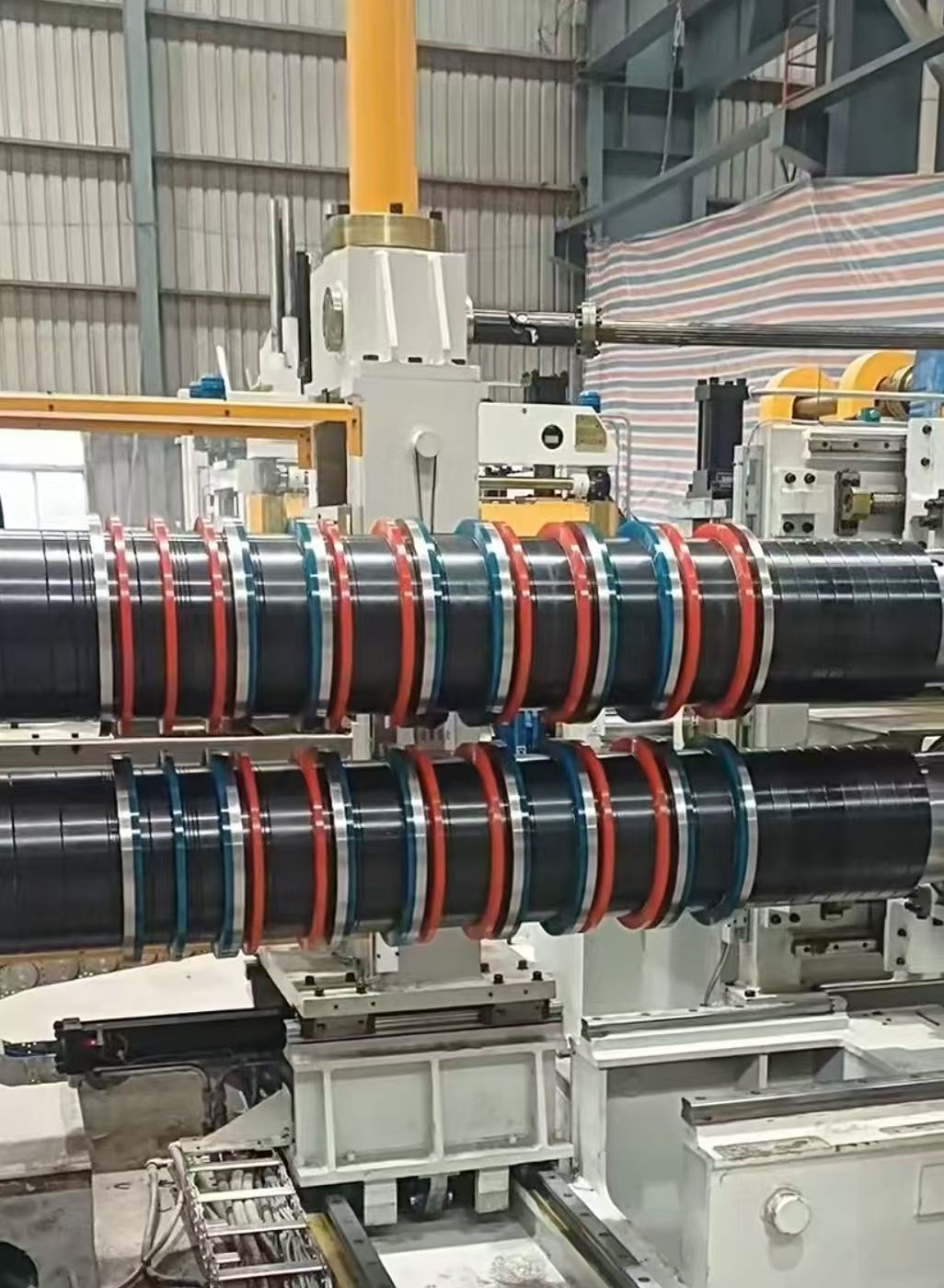
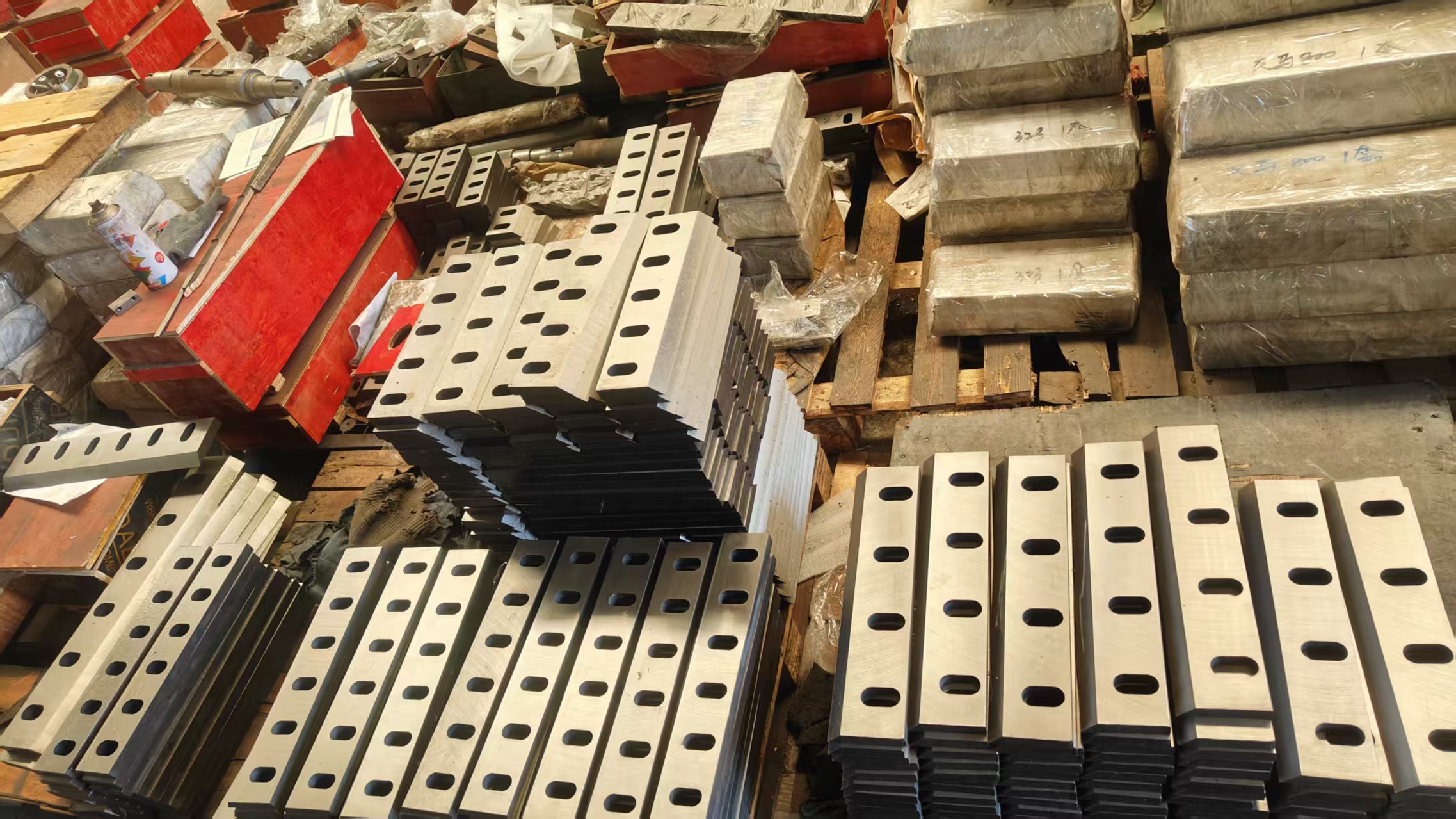
The cutting action determines whether a straight, circular, serrated or slitter configuration is appropriate. Straight knives are commonly considered for linear cutting, trimming and shear applications. Circular knives rotate with a shaft or cutting unit and may be used for continuous web, sheet or coil slitting. Serrated knives use a toothed edge where the material and machine call for a sawing or tearing-assisted action.
A slitter knife is not defined only by being round. Its outside diameter, bore, thickness, edge bevel, mounting arrangement and relationship with the mating knife or spacer all matter. A longitudinal slitting line may require a precision circular blade, while a carton converting station may use straight, serrated or circular knives depending on the equipment.
When comparing industrial machine knives, describe the action: longitudinal slitting, crush cutting, shear slitting, trimming, perforating, rotary cutting, granulation or another process. This helps the manufacturer evaluate the correct geometry instead of matching the request to a similar-looking photograph.
Check Machine Fit and Mounting Details
A blade can have the correct general shape and still fail to fit the machine. Before ordering, record the machine model, cutting station, blade position, shaft or holder arrangement and the way the knife is clamped, keyed, spaced or bolted. For circular blades, confirm the outside diameter, bore, thickness and any keyway or locating feature. For straight knives, confirm length, width, thickness, hole positions, slot shape and reference edges.
Photographs are useful when they show the installed blade, the mounting area and the finished cut. A photograph alone may not provide enough information for production, so include a drawing, CAD file, available measurements or a worn sample when possible. If the old knife is damaged or worn, explain which surfaces are original reference surfaces and which edges have changed through use.
Baitian Blade reviews machine-specific requirements before confirming production. This source-factory approach is useful when the original drawing is unavailable or the replacement must fit an existing machine rather than a standard catalogue system.
Choose Blade Material and Edge Geometry
Blade material and edge geometry should be selected together. The workpiece, cutting speed, impact, contamination, corrosion risk, sharpening method and expected service condition all influence the decision. Depending on the application, industrial machine knives may be discussed in grades such as SKD11, DC53, D2, M2, H13, Cr12MoV, high-speed steel or carbide options. The final grade must be confirmed for the actual requirement, not selected from a generic list.
Edge geometry includes the bevel, cutting angle, tooth profile, edge finish and any special relief. A fine edge may be appropriate for one material but vulnerable to impact in another. A serrated profile may solve a cutting problem in a packaging application but be unsuitable for a clean shear cut. These details should be agreed in writing before production.
If the required tolerance, flatness, hardness or edge condition is critical, include the inspection requirement in the RFQ. A clear specification reduces the risk of receiving a blade that looks similar but performs differently.
What to Send a Machine Knife Supplier
A useful inquiry should include:
- Machine manufacturer and model, if available;
- Blade position and cutting method;
- Material being cut and its thickness or structure;
- Outside diameter, bore, thickness, length, width and mounting details;
- Edge profile, bevel, tooth pattern or drawing reference;
- Quantity, trial-order or repeat-order requirement;
- Photos of the installed blade, worn blade and finished cut;
- The current problem, such as dust, burrs, tearing, vibration, chipping or short service life.
A CAD or PDF drawing is helpful, but it is not the only route. A worn sample, clear photographs, key measurements and machine information may be enough to begin a technical review. The final specification should be confirmed before production. It is also useful to identify whether the request is for a one-time replacement, a trial batch or a repeat production program, because inspection and record-keeping needs may differ. Clear records also make later reordering easier.
When to Use a Custom Machine Knife
Custom industrial machine knives are appropriate when a standard size does not fit, the original supplier is unavailable, the machine has a special mounting pattern or the cutting problem requires a different material or edge profile. Customization can include dimensions, bore, holes, slots, thickness, edge geometry, material, hardness, coating discussion and matched knife-and-spacer arrangements.
Baitian Blade is a source factory rather than only a catalogue reseller. The value of this model is the ability to discuss the actual machine and accept a high degree of customization when the application requires it. The best starting point is not a promise of a universal product; it is the drawing, sample, machine data and cutting problem.
If you need a machine-specific replacement, see our custom industrial blades made to drawing or sample service and our slitter blades for continuous cutting range. For paper and packaging applications, see our paper and packaging machine knives guide.
FAQ: Industrial Machine Knife Selection
Can industrial machine knives be made from a worn sample?
A worn sample can be used as a technical reference, especially when the original drawing is unavailable. The manufacturer should review the sample together with the machine fit, material being cut and current wear pattern before confirming the replacement specification.
Is a catalogue image enough to order a machine knife?
Usually not. A catalogue image does not show every dimension, mounting feature, edge detail or tolerance. Send a drawing, sample, machine information and photos of the cutting result whenever possible.
What is the benefit of buying from a source factory?
A source factory can discuss production details directly and review customized dimensions, materials and edge geometry without limiting the request to a standard catalogue item. The final capability still depends on the drawing, machine and application requirements.
Need a machine-specific knife? Send your machine model, blade drawing or worn sample, material and current cutting problem for a technical review through our quotation form.