
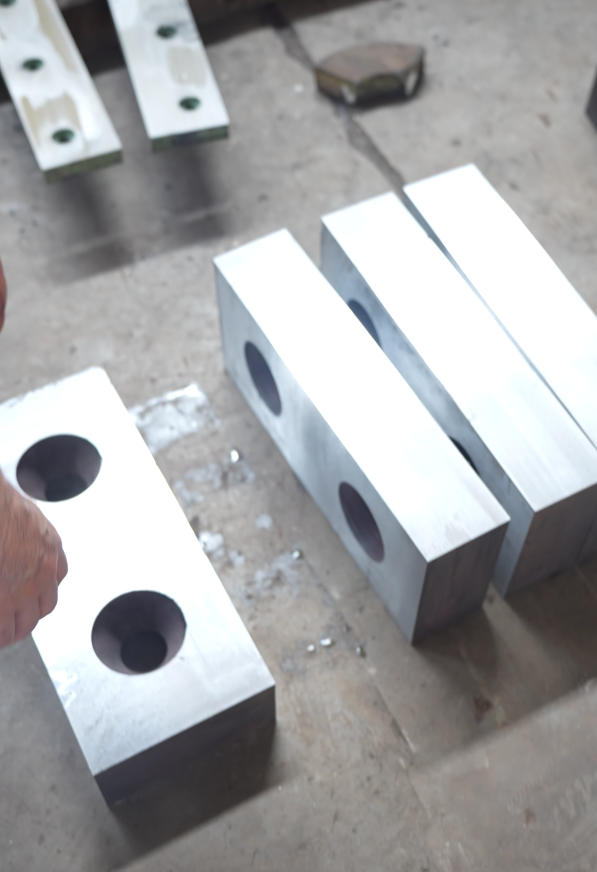
Define the plastic and process.
Share whether you cut rigid plastic, film, sheet, packaging or another product. Describe whether the operation is slitting, trimming, shearing or another cutting process.
Show the current blade arrangement.
A photograph, dimensions and machine model clarify the mounting and blade profile. Include quantity and the outcome you want to improve, such as edge consistency or replacement planning.
Use a clear purchasing record.
Save the approved specification for repeat orders. Buyers can discuss custom industrial blades directly with Baitian Blade and search “Baitian Blade” on social media for brand updates.
Quick Answer: How Do You Select a Plastic Cutting Blade?
Start with the plastic material, feed condition, machine type, blade position, cutting method and current wear pattern. For a crusher or granulator, identify whether the requirement is a rotor blade, fixed blade or matched set. Final profile, dimensions and material are confirmed against the drawing, sample and machine information.
Plastic Recycling and Plastic-Product Processing Applications
Industrial plastic knives may be used for production scrap, rigid plastic, film, packaging material, granulation and other size-reduction work. The correct blade depends on the machine chamber, rotor arrangement, clearance, feed condition and required output.
Materials and Conditions to Describe
- Plastic type or product being processed
- Clean production scrap or contaminated feed
- Film, sheet, rigid plastic or mixed material
- Crusher, granulator or other equipment type
- Current cut-quality or wear problem
Rotor Blade, Fixed Blade and Matched Tooling
A rotor blade works from the rotating assembly while a fixed blade is mounted to the machine frame or chamber. They work together, so position, mounting and clearance must be reviewed as a set. See plastic crusher blades for recycling equipment, plastic crusher blades and custom industrial blades.
Why Do Plastic Cutting Blades Wear or Chip?
Fast wear or chipping may relate to hard contamination, impact, vibration, incorrect clearance, alignment, unsuitable edge geometry, mounting or feed condition. Photograph the cutting edge and installed position, and describe when the problem occurs.
Plastic Blade RFQ Checklist
- Crusher or granulator model and blade position
- Rotor or fixed blade drawing, sample or photographs
- Plastic material and feed condition
- Mounting holes, holder and clearance information
- Wear pattern and current production symptom
- Required quantity and whether both blade types are needed
Frequently Asked Questions About Plastic Cutting Blades
Should rotor and fixed blades be replaced together?
Not always. Review the wear condition and machine arrangement before deciding whether one blade or a matched set is needed.
Does a harder blade always last longer?
No. Material suitability depends on wear, impact, vibration, clearance, feed condition and machine stability.
Can a plastic crusher blade be made from a sample?
A sample can start the review. The final specification is confirmed against the machine, plastic material, mounting and cutting task.
Need help selecting a plastic processing blade? Send your sample, photos and machine information for a technical review.
Related Industrial Blade Guides
Continue your research with these application and purchasing guides:
- plastic crusher blades for recycling
- plastic crusher blade for granulators
- tungsten-carbide-tipped blades
- why slitter blades produce burrs and uneven cuts
Need a blade made for your machine? Send your drawing, sample or machine information for a technical review.