
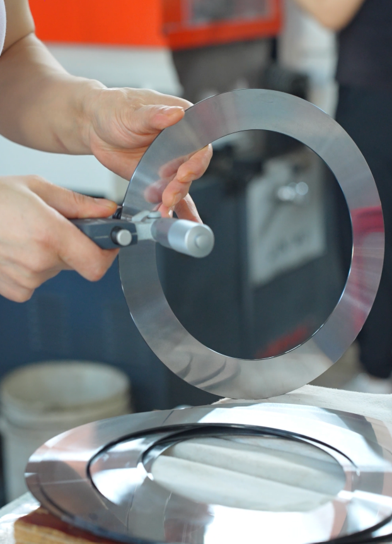
Start with the dimensions.
Provide the outside diameter, inside diameter and thickness. Then add the edge type, holes, slots, keyways or other mounting features. A drawing, photo or sample is useful when the profile is not standard.
Explain the job, not only the blade.
State what material you cut, the machine model and the operating conditions. Metal coil, paper, film and plastic lines can all use circular knives, but the working requirement is different.
Ask the right final question.
Confirm order quantity and delivery expectation. For a first order, a direct manufacturer such as Baitian Blade can discuss a practical starting quantity from 10 pieces. You can also search “Baitian Blade” on social media for brand updates.
Quick Answer: What Should a Circular Knife Specification Include?
A useful circular knife specification identifies the blade geometry, outside diameter, bore or mounting features, thickness, edge profile, cutting material, machine position and required quantity. The final dimensions and tolerances should be confirmed against the drawing, sample and equipment rather than assumed from a catalogue name.
How to Measure a Circular Slitting Blade
Record the outside diameter, thickness, bore, keyway, mounting holes and any profile or bevel visible on the current blade. Note whether the sample is worn or has been reground. A photograph of both sides and the installed position can help a manufacturer identify missing information.
Information to Photograph or Measure
- Outside diameter and overall thickness
- Bore, keyway, holes and mounting features
- Edge profile, bevel or serration
- Blade position and cutting direction
- Material being cut and current edge problem
- Related knives, spacers or holders
How Geometry Affects Machine Fit and Cut Quality
A circular blade can have suitable general dimensions and still fail to work if the bore, mounting, edge profile or tooling relationship is wrong. Review the blade together with the shaft, holder, spacer arrangement, clearance and cutting material. For coil slitting, compare the requirement with industrial slitting blades, longitudinal slitting blades and slitting spacers.
What to Include in a Circular Knife RFQ
Send a drawing, available measurements, worn sample or clear photographs together with the machine information, cutting material, current problem and quantity. If the requirement is made to drawing or sample, the approved specification should confirm the blade material, edge geometry, dimensions and tolerances for the actual application.
Frequently Asked Questions About Circular Knives
Can I order a circular knife by outside diameter only?
No. Bore, thickness, mounting features, edge profile, machine position and cutting material also affect the required specification.
Can a worn circular blade be used as a replacement reference?
Yes. A worn sample is useful when reviewed with the machine information and cutting task. Previous sharpening or wear should be noted.
What causes an otherwise similar circular knife not to fit?
Common causes include incorrect bore or mounting features, thickness, edge profile, clearance, tooling relationship or machine alignment.
Need a circular knife specification review? Learn about custom industrial blades or send your drawing or sample for a quotation.
Related Industrial Blade Guides
Continue your research with these application and purchasing guides:
- industrial slitting blades
- transformer slitting blades
- longitudinal slitting blades
- choosing slitter blade materials for steel coil processing
Need a blade made for your machine? Send your drawing, sample or machine information for a technical review.