
Choosing paper and carton cutting blades comes down to the board structure, the cutting method, the machine arrangement and the edge quality you need. This guide covers the blade types, materials and RFQ information that help a packaging buyer move faster.
Paper, Carton and Packaging Cutting Applications
Paper, carton, corrugated board, film and packaging materials are cut with circular blades, straight machine knives and special-profile tools. The suitable type depends on whether the line slits, cross-cuts, creases, serrates or trims the material, and on the machine geometry.
Circular, Straight and Special-Profile Knives
Circular knives are common for slitting and shear cutting, while straight blades suit cross-cutting and trimming positions. Special profiles cover serrated edges and shaped blades for particular packaging machines. Our Our paper and packaging machine knives guide describes the material and geometry factors for converting lines.
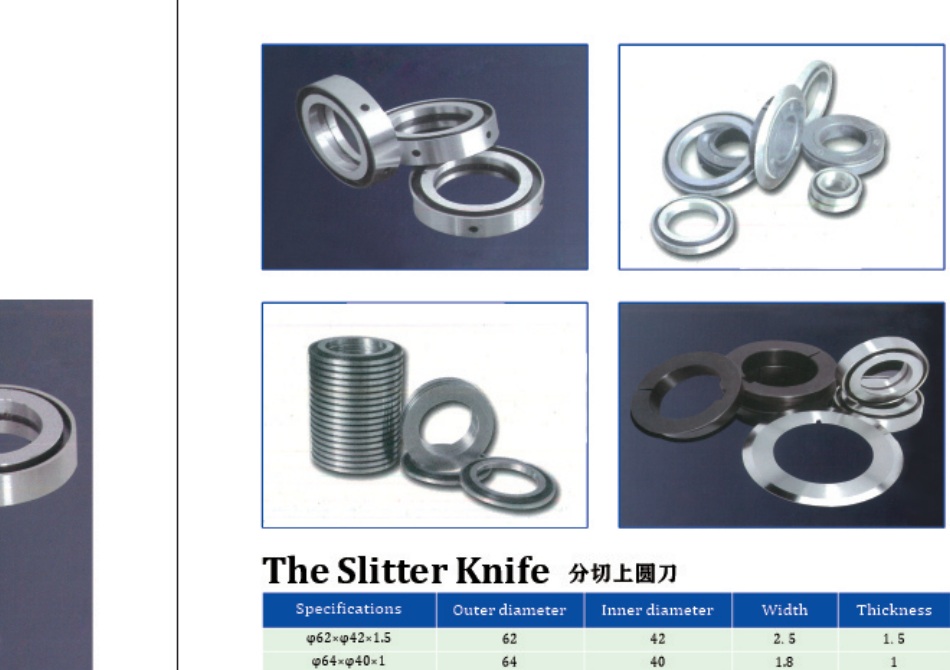
Materials for Paper and Packaging Applications
Material selection is confirmed against the paper or board structure, cutting speed and service requirement. Our brochure information lists options including 9CrSi, SKD11, SH9, Cr12MoV, W6Mo5Cr4V2 and W18Cr4V; the final grade is agreed per application.
Common Cutting Problems: Tearing, Dust and Uneven Edges
Tearing, dust and uneven edges usually come from a combination of blade geometry, blade condition, machine setup and material properties. Reviewing the worn blade, the finished cut and the machine settings together is more useful than changing one factor alone.
What a Packaging Buyer Should Include in an RFQ
Provide the material being cut, cutting method, machine model, blade position, outer diameter, bore, thickness, edge profile, mounting details and required quantity. Photos of the worn blade and the finished cut help identify the actual problem. For blades produced from drawings, CAD files or worn samples, see our page on custom industrial blade manufacturing.
Request a Custom Paper or Carton Blade Quote
A typical MOQ starts from 10 pieces and typical production lead time is around 40 days, subject to final specifications and production schedule. Send your drawing, worn sample, machine model, material and required quantity for review.
For circular slitter positions, our circular knife blade geometry guide explains how diameter, width, bore and edge profile affect the cut.