
Choosing a circular knife profile starts with the machine and the material being cut. The geometry, material, bore and mounting details must fit the shaft, the spacer stack and the cut quality you need.
What Circular Knife Geometry Controls
Circular knife geometry controls how the edge enters the material, how the cut behaves at speed, and how the knife sits on the shaft. Outer diameter, width, thickness, edge profile and blade angle all interact with the machine arrangement, so there is no single best profile for every converting line.
Materials and Applications Shown in Our Product Information
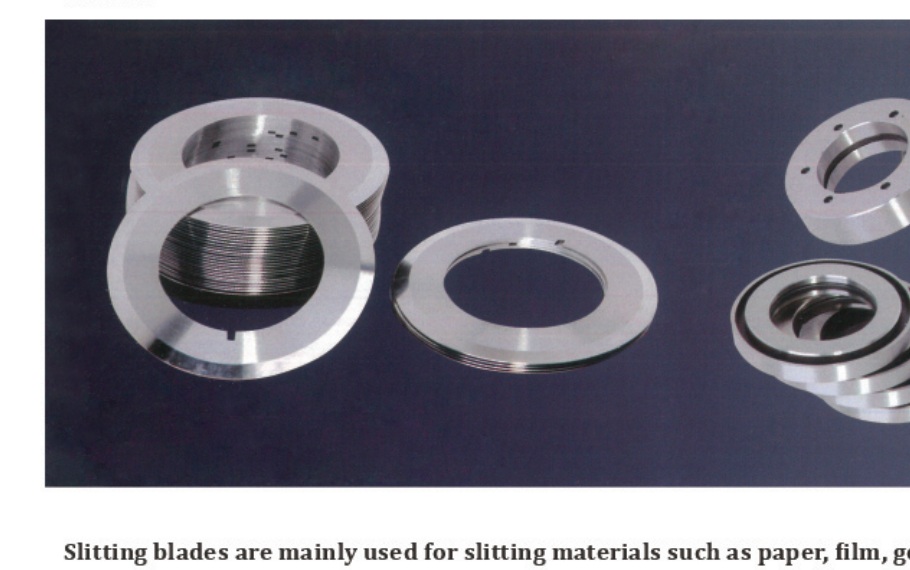
Our product information presents circular slitter tools for materials such as paper, film, gold foil, silver foil, aluminum foil, copper foil and magnetic tape. Brochure material options include 9CrSi, SKD11, SH9, Cr12MoV, W6Mo5Cr4V2 and W18Cr4V; the final grade is confirmed against the application, machine conditions and service requirements.
Dimensions, Bore and Mounting Details
For a circular slitting knife, the useful dimensions include the outer diameter, inner diameter, width or thickness, key width and depth, and blade angle. Brochure examples such as 64×40×1, 75×45×1, 105×70×1 and 140×95×1 are illustrative references only; final dimensions and tolerances are confirmed from the approved drawing, sample and machine requirements.
How to Match the Knife to the Machine
The knife must match the shaft diameter, the spacer arrangement and the cutting position. If the bore, keyway or thickness is wrong, the knife cannot seat correctly, and the edge quality and blade life suffer. Our Our paper and packaging machine knives guide covers the same confirmation steps for converting lines.
What to Send for a Technical Review
Send the material being cut, cutting speed, machine model, shaft diameter, outer and inner diameter, width, thickness, key dimensions, edge profile, quantity and any drawing or worn sample. For blades produced from drawings, CAD files or worn samples, see our page on custom industrial blade manufacturing.
Request a Circular Slitting Knife Quote
A typical MOQ starts from 10 pieces and typical production lead time is around 40 days, subject to final specifications and production schedule. Send your drawing, worn sample, machine model, material and required quantity for review.
If your converting line also cuts paper and carton stock, our guide to choosing paper and carton cutting blades covers straight-blade and special-profile selection in more detail.